 Skip to content
Blog
How Ventilated Mesh Bags Improve Fresh Produce Shelf Life
Fresh produce doesn’t stop “living” after harvest. Onions, potatoes, citrus, garlic, and many other crops continue to respire, releasing moisture and heat. If that moisture gets trapped, spoilage accelerates. This is exactly why ventilated packaging matters, and why mesh onion bags and other mesh polypropylene bags have become a standard in produce handling worldwide.
In this case study–style breakdown, we’ll look at how leno mesh bags preserve freshness, reduce waste, and improve profitability across the supply chain, and why Cady Bag is a standout manufacturer in this space.
The core problem: produce needs air, not plastic
Sealed or low-ventilation packaging creates a micro-climate:
- Heat builds up
- Humidity rises
- Mold and rot spread faster
- Quality drops before produce reaches shelves
Produce associations and storage guidelines for onions are blunt about this: low air circulation shortens shelf life, and storing onions in plastic is discouraged because it traps moisture.
So the solution is simple in concept: keep air moving around every bulb or fruit.
Why ventilated leno mesh works
- 360-degree airflow slows spoilage
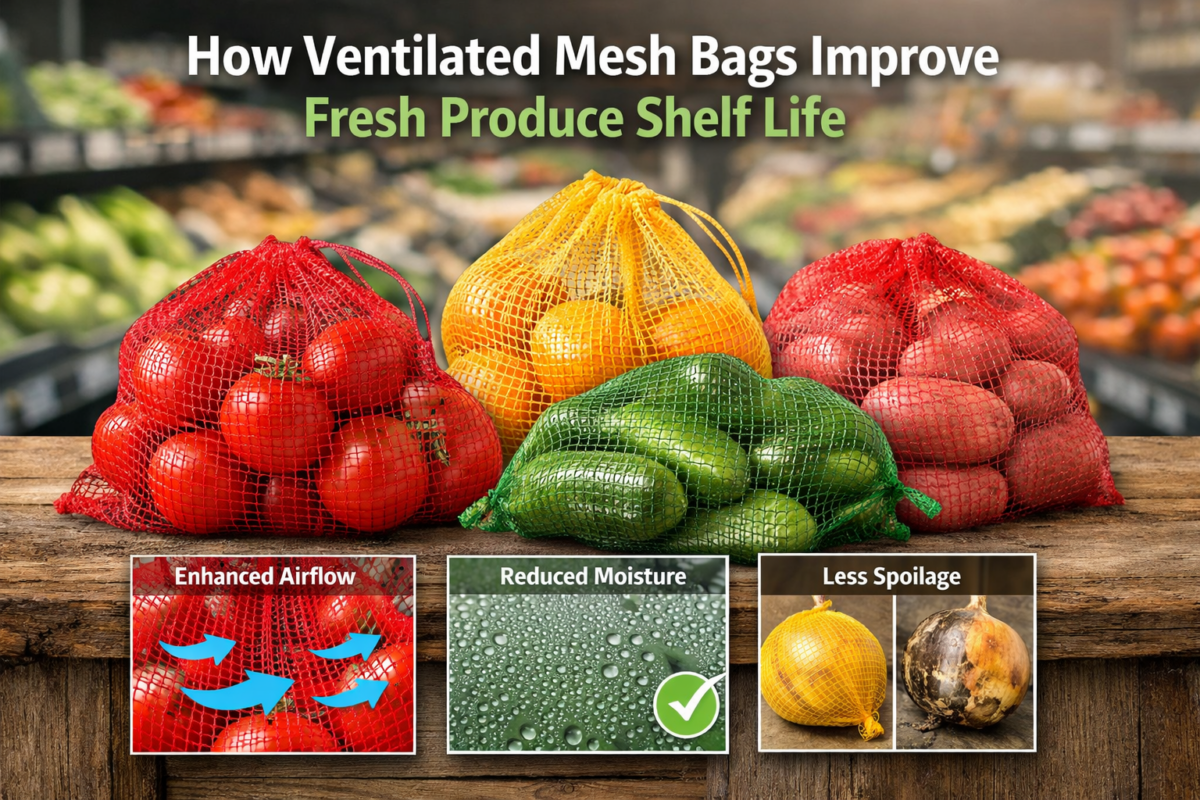
Leno mesh bags use an open-weave pattern that allows air to circulate through all sides of the bag. This ventilation prevents the dangerous combination of trapped moisture + heat that causes rot.
- Moisture control = longer shelf life
Because airflow stays consistent, humidity doesn’t spike. That reduces mold growth and soft spots, especially for root vegetables.
- Produce stays visible and easy to inspect
Mesh polypropylene bags let handlers see the contents immediately. That means faster quality checks, fewer rejected shipments, and less manual handling.
- Strong enough for transport, light enough for efficiency
Polypropylene leno mesh combines durability with low weight. The bags resist tearing under heavy loads, reducing product loss during shipping and stacking.
Where mesh onion bags make the biggest difference
Different crops fail in different ways, but airflow helps nearly all of them. Common best-fit use cases include:
- Onions & garlic: need dry, breathable storage to avoid mold and sprouting
- Potatoes & sweet potatoes: moisture control prevents soft rot and breakdown
- Citrus & apples: ventilation reduces condensation and bruising risk
- Firewood & shellfish (secondary market): airflow prevents odor, dampness, and degradation
The pattern is consistent: if freshness depends on dryness and air circulation, mesh packaging extends life.
The Cady Bag advantage: built for real produce logistics
Cady Bag isn’t a reseller of generic packaging. They’re a long-established, vertically integrated producer of woven polypropylene solutions with decades of manufacturing experience in agriculture packaging.
Here’s what that means for customers who rely on mesh polypropylene bags:
Manufacturing expertise that shows up in performance
Cady Bag’s leno mesh construction is designed to balance three things growers care about most:
- Ventilation
- Strength
- Consistency bag-to-bag
That consistency matters when produce is stacked 6–10 layers high, shipped cross-country, or stored for weeks.
Crop-specific formats and sizes
For onion and potato supply chains, bag design isn’t cosmetic. Fill weight, mesh openness, drawstring/closure style, and label placement all impact handling speed and spoilage rate. Cady Bag’s product line supports these realities with standardized produce-ready formats.
Durability that reduces waste and cost
A torn bag isn’t just packaging loss—it’s a spill, a cleaning delay, and often a rejected load. Strong, breathable mesh reduces those downstream losses, which is one reason leno bags are widely adopted for food-loss reduction.
Practical outcomes: what improved ventilation changes in the supply chain
When farms, packers, and distributors switch to ventilated mesh onion bags, they typically see:
Longer holding time in storage without quality drop
Lower shrink rates at retail
Fewer mold or rot claims
Better visual presentation on shelves
More efficient transport due to lighter packaging
Even small shrink reductions add up quickly when margins depend on sell-through speed.
How to choose the right mesh polypropylene bags
If you’re sourcing produce packaging, use these criteria:
- Airflow openness matched to the crop
Too open can bruise soft fruit; too tight traps moisture. - Load rating and weave strength
Especially important for 25–50 lb onion or potato packs. - UV and moisture resistance for long storage cycles
- Reliable manufacturing quality
Variability in weave or closure is where shelf life gains disappear.
Cady Bag’s leno mesh line is engineered around these exact criteria, which is why produce businesses rely on them for repeat orders, not one-offs.
Conclusion
Ventilated leno mesh isn’t a packaging trend; it’s a shelf-life tool.
By keeping produce dry, calm, and aerated, mesh onion bags and mesh polypropylene bags help crops travel farther, store longer, and sell fresher. The result is less waste, higher quality, and better returns for everyone from grower to retailer.
If your operation depends on freshness under real-world logistics, Cady Bag’s durable leno mesh bags are a proven way to protect produce and extend its shelf life.